The Arizona Republic is reporting that “potential buyer” Matt Hulsizer paid money into escrow to the NHL. The city owes the league $25 million to cover losses after the NHL took over the team last season. The city of Glendale sent out a release on the issue, as reported by the Republic: "As the city and the prospective buyer work toward finalizing documents, in a show of good faith, the prospective buyer has deposited $25 million dollars into escrow," Glendale's statement read. "This shows the city has met the NHL deadline for finding a qualified buyer, who will keep the team here, a requirement to release the City's $25 million currently in escrow," the statement said. "Glendale and the NHL will continue to move forward to work with the prospective buyer to facilitate a purchase of the team that will keep the Coyotes in Glendale for the long term."
Keep in mind if Hulsizer, or whoever the “potential buyer” is, and the city don’t reach a deal, the city will be on the hook for the $25 million again. We’ve often wondered why the city chose to shut down a deal that would have made current Chicago Bulls and White Sox owner Jerry Reinsdorf the new owner of the Coyotes. The deal had an out clause, but still, if Reinsdorf can’t make it work in Glendale, no one can. But, that ship sailed and the city can only wait and hope Hulsizer comes through.
Matthew Coller is a staff member of the Business of Sports Network, and is a freelance writer. He can be followed on Twitter
ProHockey Talk’s Joe Yerdon reports that the NHL Board of Governors approved a by-law which eliminates shootout wins from being used as a factor in tie-breakers in figuring playoff placement.
The move is an attempt to increase the importance of winning in regulation or in the first overtime. Earlier this off-season, a debate waged over whether the shootout should continue to exist.
According to ProHockey Talk, here’s how the rule book reads now:
NHL By-Law 27.3 now reads as follows (with the approved revision in underlined italics): At the conclusion of the regular Schedule of Championship Games the standing of the teams in each Conference shall be determined in accordance with the following priorities in the order listed:
a) First place in each of the three divisions seeded 1, 2 and 3.
b) The higher number of points earned by the Club.
c) The greater number of games won by the Club (excluding games won in the Shootout).
d) The higher number of points earned in games against each other among two or more Clubs having equal standing under priorities (b) and (c).
e) The greater differential between goals scored for and against by clubs having equal standing under priority (d).
The change seems to be more of an attempt to appease the shootout haters, and somewhat of a weak one at that. The question is will we really see teams fight to score against non-conference opponents or, when the game is tied, will they sit back for the guaranteed two points? Fringe teams may play a little harder, but locks for the playoffs will take the one point.
OTHER NEWS FROM THE BUSINESS OF SPORTS NETWORK
(THE BIZ OF BASEBALL)
Re-Ranking the Top 10 Markets for Relocation or Expansion
MLB Releases Master Schedule for 2011 Season
Minor League Baseball Draws 41.4 Million Fans for 2010
Rays Draw Just 26,907 for Key Match-Up Down the Stretch with Yankees
Matthew Coller is a staff member of the Business of Sports Network, and is a freelance writer. He can be followed on Twitter
Maybe they’d sound like 10-year olds, but if the Devils were to cry “no fair” on the NHL, who could blame them? The NHL poured salt in the wound of the New Jersey Devils by fining the team for attempting a legal contract that they already rejected (source: NHL.com). The Devils’ attempted to sign Ilya Kovalchuk to a 17-year, $102 million contract this summer, but were turned down by the league. They tried again, got the deal accepted but now face a $3 million fine and the loss of a first and third round pick as punishment for their legal contract.
The NHL is sending a clear message to teams who try to sign free agents to long-term, front-loaded contracts. As we’ve followed all summer, similar long-term, front-loaded deals to stars such as Chris Pronger and Marian Hossa went unpunished by the league, even after they investigated and decided on new guidelines.
The Blackhawks and Flyers (among others) were grandfathered in despite breaking the rules that didn’t exist. Long-term, front-loaded deals were allowed according to the Collective Bargaining Agreement due to a loophole that took the average salary across the length of a contract as the team’s cap hit.
It seems rejecting the contract and forcing the team to re-work the deal was punishment enough. It forced the Devils to work around a bigger cap hit, throwing a wrench in their cap blueprint for the next, say, 17 years or so. But, the NHL elected to punish the team twice for the same crime (which, again, wasn’t actually illegal to begin with).
OTHER NEWS FROM THE BUSINESS OF SPORTS NETWORK
(THE BIZ OF BASEBALL)
A's Exercise Option on Manager Bob Geren's Contract for 2011
Former MLBPA Exec Director Donald Fehr to Accept NHLPA Exec Dir. Position
Astros Promo to Attempt World Record for "Largest Harmonica Ensemble"
Matthew Coller is a staff member of the Business of Sports Network, and is a freelance writer. He can be followed on Twitter
It’s a move we all expected. The NHLPA has finally approved former MLBPA head Donald Fehr, now all that awaits is an inevitable approval by the players, then it’s time to get down to business in working out a new Collective Bargaining Agreement.
Here is the press release sent out by the NHLPA concerning their endorsement of Fehr:
The National Hockey League Players' Association (NHLPA) announced today that its Executive Board has voted to accept the recommendation of the Search Committee (Ryan Getzlaf, Jamie Langenbrunner, Brian Rafalski, Brian Rolston and Mathieu Schneider) that Don Fehr be named the new NHLPA Executive Director.
The recommendation to appoint Fehr as Executive Director will next be submitted to the full NHLPA membership for consideration, along with various amendments to the NHLPA Constitution that were approved by the Executive Board earlier this summer. The Executive Director and Constitution membership votes are expected to conclude following individual team meetings that will take place during training camp and the first part of the regular season, and Fehr’s appointment will not become official until that time. In the interim, Fehr will continue to assist the NHLPA as a consultant.
"The Search Committee is pleased that the Executive Board has endorsed our recommendation to select Don Fehr as our new Executive Director and we look forward to our fellow members voting on this important matter," said Mathieu Schneider.
"I am gratified by the Executive Board's vote, and I look forward to meeting all the Players at team meetings which begin later this month," said Fehr.
Fehr, 62, joined the Major League Baseball Players Association as its General Counsel in 1977, and served as the MLBPA Executive Director for 26 years until he stepped down in December, 2009.
OTHER NEWS FROM THE BUSINESS OF SPORTS NETWORK
(THE BIZ OF BASEBALL)
Astros Promo to Attempt World Record for "Largest Harmonica Ensemble"
A Note to Forbes
Todd Ricketts Goes "Undercover Boss" with the Chicago Cubs
MLB On Pace to Have Lower Attendance Than Last Season
Matthew Coller is a senior staff member of the Business ofSports Network, and is a freelancewriter. He can be followedonTwitter
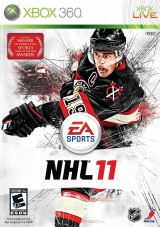
September 7, 2010, the Chicago Blackhawks’ under-24 Stanley Cup winning tandem of Patrick Kane and Jonathan Toews will do what people under 24 do: play video games. The two generation X’ers who faced off in the 2010 Olympics and raised the cup together will now raise video game controllers to on the streets of Manhattan at the Reebok Store to kick off the release of EA Sports’ NHL 11.
The two players will apparently compete in a live trick shot competition before playing USA vs. Canada on EA’s newest hockey game. The first 100 fans will also get their NHL 11 copy signed by the stars.
The game was given an 8.5 rating by IGN.com.
Matthew Coller is asenior staff member of the Business ofSports Network, and is a freelancewriter. He can be followedonTwitter
I know what you’re thinking: “Whew! It’s finally over.” Yes, the summer-long saga that was superstar forward Ilya Kovalchuk’s contract has come to an end. But, the NHL’s approval of the agreement between the New Jersey Devils and Kovalchuk worth $100 million over 15 years did not come without caveat.
The old system of determining cap hit was to take the average salary throughout the duration of the contract. Just reading those words you can see what NHL officials didn’t: teams will sign long-term deals to reduce cap hits. And, though there was nothing in the Collective Bargaining Agreement against the original 17-year, $102 million deal, the NHL rejected it and had their rejection upheld.
As we know, Kovy and the Devils aren’t the first to give this a go. The Chicago Blackhawks’ forward Marian Hossa, the Vancouver Canucks’ goalie Roberto Luongo and the Boston Bruins’ forward Marc Savard all signed deals they never intended on playing out.
After the rejection of Kovalchuk’s first deal, we thought it would have two effects: ending future long-term, front-loaded deals and putting those of Hossa, Luongo etc. in jeopardy. It had neither effect. First, the Hossa-like deals will be grandfathered in. Second, When the NHL finally approved the new 15-year, $100 million deal, they came out with new guidelines for long-term deals. Those guidelines according to the Associated Press are:
The compensation for all seasons that do not include or succeed the player’s 41st birthday will be totaled and divided by the number of those seasons to determine the annual average value. In all subsequent seasons, the team’s cap charge will be the actual compensation paid to the player in either that season or seasons.
For any long-term contract that averages more than $5.75 million for the three highest-compensation seasons, the salary cap value for any season in which the player is age 36, 37, 38, 39 and/or 40 shall be a minimum of $1 million.
Considering Kovalchuk’s contract was only different by two years and $2 million, it’s hard to see those rules doing a whole lot of deterring of front-loaded long-term deals for players pre-30, but post-30 players may have it tough. We’ll use two 2011 free agents as examples to demonstrate how the new rules affect superstars:
D Zdeno Chara – 33-years old – Chara may have taken the biggest hit. Chara is currently is making $7.5 million. Under the old system, he could have signed a deal that would have taken him into his mid-40s and topped out in the $10 million range in the first few years of the deal. Now, the Bruins won’t bother to sign him past 40, they’ll likely take him to 40 with a 6-year deal at $1 million for the final year or two of the deal. Six years isn’t bad for a current 33-year old, but since the team can’t stretch the deal out to lower the cap hit, he’s not going to see quite the pay day as he would have before.
F Alexander Semin – 26-years old – Semin may not be seen as quite the caliber of Kovalchuk, but he already makes $6 million and will be looking to be locked up for life. Whatever team signs Semin will stick to signing him until the age of 40 as it is no longer beneficial to sign past that age. That leaves said team with 13 years. If you sign him for the minimum final four years of $1 million, he could easily sign for $100 million and make $96 of that in the first nine years. That would make his salary in the first nine years at $10.7 million but cap hit in the $7.7 million range. I’m not saying Semin is worth $100 million over 13 years, but you can see how teams can still reduce their cap hit but not by as much.
OTHER NEWS FROM THE BUSINESS OF SPORTS NETWORK
(THE BIZ OF BASEBALL)
Revenues: Forbes vs. Leaked MLB Financial Docs
Nationals’ Nyjer Morgan Suspended
Alex Rodriguez's New Agent Reflects Changing Role of Player Representation
Court Documents Show Los Angeles Dodgers Are Awash in Debt
Matthew Coller is a senior staff member of the Business ofSports Network, and is a freelancewriter. He can be followedonTwitter
Alliance Tickets carries an extensive inventory of all NHL Tickets, including Colorado Avalanche Tickets, and we also carry tons of Colorado Rockies Tickets